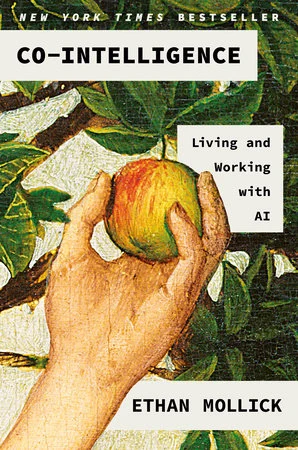
A return to practical AI: how people can work with capable tools while keeping judgment and responsibility.
The review
Mollick explores the implications of generative AI for work, learning, and creative activity. The book encourages engagement with the technology while taking its limitations seriously. It is a useful counterpoint to discussions that focus only on distant possibilities or treat automation as a simple replacement for human contribution.
For an enterprise team, the productive question is which parts of a real task benefit from assistance and which still demand expert review. A demonstration can make a tool appear broadly competent; an operating workflow needs a clearer account of inputs, acceptable outputs, permissions, exceptions, and ownership. Experimentation becomes more useful when it produces evidence about those boundaries.
Consider an illustrative analyst who uses AI to draft a comparison and then spends longer checking invented details than drafting would have taken. Another task, such as generating alternative questions for a workshop, may benefit with far less correction. The lesson is to assess assistance at the task level rather than deciding that AI is either universally useful or useless. For personal learning, the same distinction matters: a tool that explains and challenges your reasoning can help understanding, while one that simply supplies the answer may conceal what you have not learned.
This book closes the January–September series by bringing the discussion back to practice. Specific tools and capabilities evolve quickly, so readers should validate examples against their current environment. The lasting value is a habit of structured exploration: involve the people doing the work, compare results honestly, and preserve accountability as capabilities change.
The following are our practical applications of the book’s ideas. Choose one action to try this week, then reflect on what changed.
IDEAS INTO ACTION · AT WORK
Three things to take to work
Compare one real task with and without assistance
Use an approved tool on a task with clear quality criteria. Compare the final output and total effort, including review, so the decision rests on observed usefulness rather than the initial impression.
Give the assistant a defined role
Specify the context, the intended audience, and the limits of the assignment. Ask for alternatives or missing questions, then have the responsible person judge which contribution is worth using.
Record where assistance stops being reliable
Keep examples of useful outputs, errors, and corrections from the evaluation. Turn them into guidance about when colleagues can use the tool and when expertise or escalation is needed.
BEYOND THE WORKING DAY
Three things to take into life
Use explanation to test your understanding
Ask an AI tool to explain an unfamiliar idea, then describe it back in your own words. Check an important factual claim and notice where your explanation still depends on borrowed language.
Explore alternatives without handing over the choice
Use a tool to generate different approaches to a low-stakes personal task. Decide what fits your circumstances yourself and revise the suggestion rather than treating the first answer as the best one.
Practise the skill as well as using the shortcut
After receiving help with a draft or problem, attempt a small part independently. Compare the results so assistance develops your capability instead of making it harder to work without the tool.
A question for your team
What is one task your team could evaluate with AI using agreed quality criteria and a named human reviewer?
FROM READING TO PRACTICE
How Genellipse can help
Genellipse can help select that task, establish a baseline, and design a governed MVP. Cortex AI provides a focus for agent orchestration and review, GeneData addresses the supporting information, and sector products such as AegisNow connect the work to industry context. We agree responsibilities, controls, and success measures with the partner before expanding scope.
Explore the related serviceThese reviews were prepared retrospectively in September 2026. Month labels organize the reading series and are not original publication dates. Personal ratings are provided by Abdollah Dehnashi; the reviews and practical applications are prepared for CEO Corner.